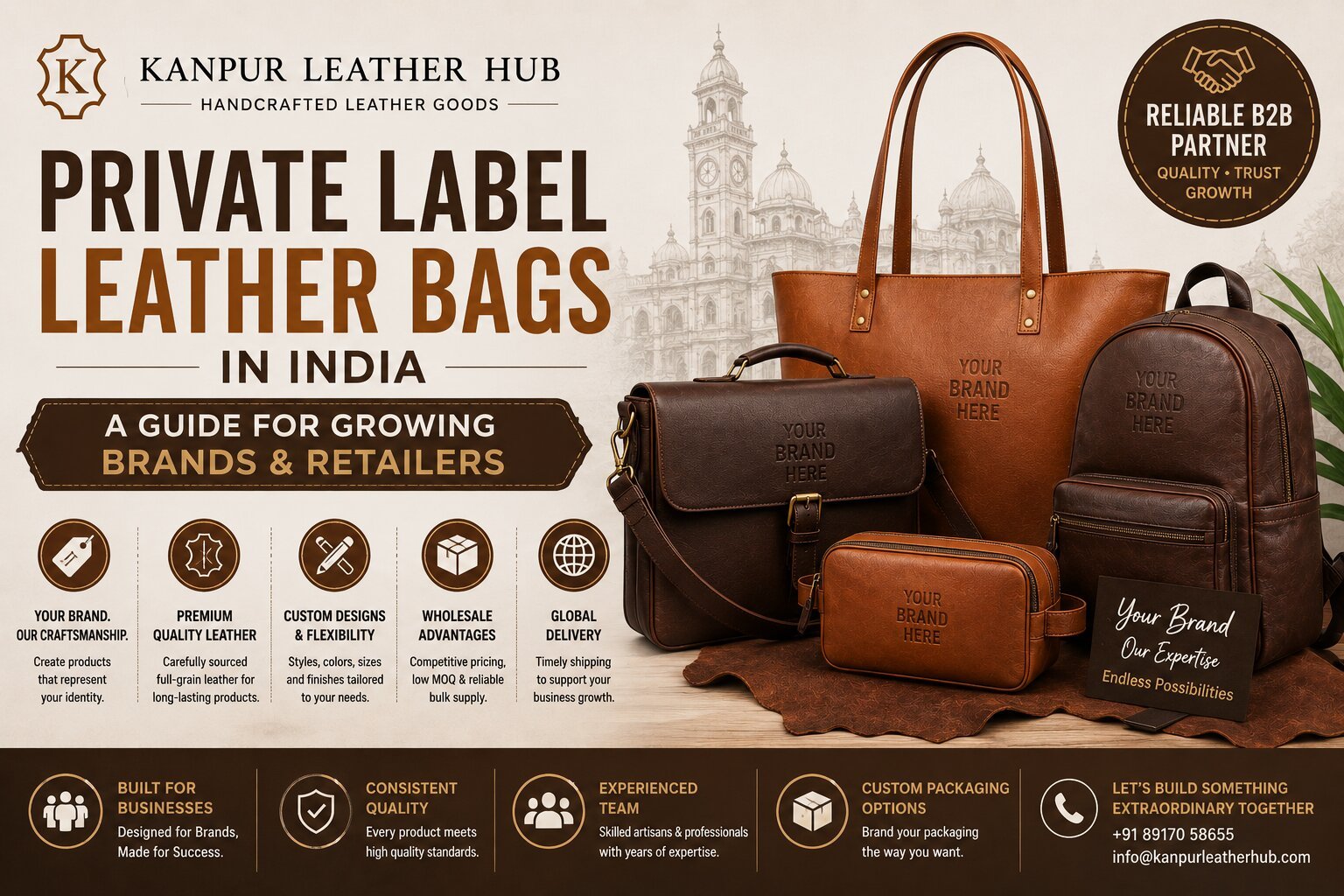
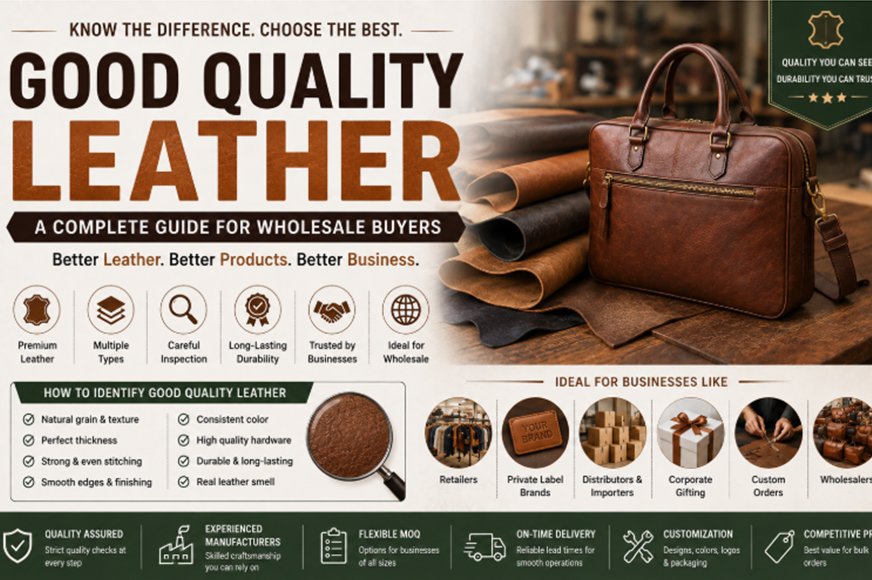
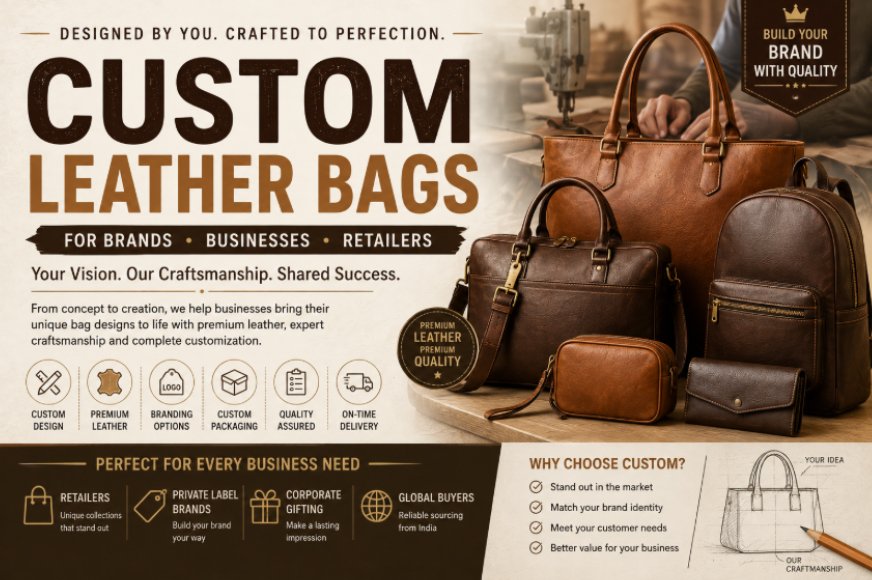
In today’s competitive market, businesses are constantly looking for ways to create products that reflect their brand identity and stand out from standard offerings. Custom leather bags have become a popular choice for retailers, fashion brands, corporate businesses, promotional companies, and private-label brands because they combine functionality, durability, and customization.
Unlike ready-made bags, customized leather bags can be developed according to specific business requirements. From selecting the leather and color to deciding the size, design, hardware, branding, and packaging, businesses have greater control over the final product.
Whether you are a retailer planning to expand your product range or a company looking for branded merchandise, understanding the customization process can help you make better sourcing decisions.
What Are Custom Leather Bags?
Custom leather bags are bags manufactured according to the specific requirements of a buyer or brand. Instead of selecting an existing design from a supplier’s standard collection, businesses can request modifications or develop an entirely new design.
Customization may include:
- Bag size and dimensions
- Leather type and finish
- Colors and textures
- Interior compartments
- Handles and straps
- Zippers and other hardware
- Logo placement
- Embossing or printing
- Linings
- Packaging
- Labels and tags
This flexibility makes customized bags suitable for businesses that want their products to have a distinctive appearance.
Why Choose Custom Leather Bags for Your Business?
One of the biggest advantages of Custom Leather Bags is the opportunity to create products that match your brand identity.
1. Strong Brand Identity
A customized bag can incorporate your company’s logo, colors, design elements, and packaging. This creates a consistent brand experience and can make your products more recognizable.
For fashion and lifestyle brands, unique designs can also help establish a recognizable visual identity.
2. Better Product Differentiation
Retail markets often contain similar-looking products. Offering a customized design can help your business differentiate itself from competitors.
Instead of selling another generic handbag, backpack, tote, or laptop bag, you can develop a product with specific features that appeal to your target customers.
3. Flexible Design Options
Businesses have different requirements depending on their target market.
For example, a corporate buyer may need professional laptop bags, while a fashion retailer may prefer handbags with specific colors, textures, and hardware.
Customization allows businesses to adjust products according to their customers rather than adapting their business to an existing design.
4. Suitable for Private-Label Businesses
Private-label brands can benefit significantly from customized leather products. A manufacturer can produce bags according to the brand’s specifications while the business sells them under its own name.
This can be useful for businesses building their own fashion, accessories, corporate gifting, or lifestyle brand.
What Types of Leather Bags Can Be Customized?
Almost any popular leather bag category can potentially be customized depending on the manufacturer’s capabilities.
Some common options include:
Leather Handbags: Customized handbags can be designed according to specific sizes, colors, handles, compartments, and branding requirements.
Leather Tote Bags: Tote bags can be customized for fashion brands, retail stores, promotional campaigns, and corporate use.
Leather Laptop Bags: Businesses can request dedicated laptop compartments, document sections, adjustable straps, and protective padding.
Leather Backpacks: Backpacks can be developed with specific storage compartments, straps, dimensions, and exterior designs.
Leather Messenger Bags: These are suitable for professional and casual markets and can be customized with different closures and interior layouts.
Leather Travel Bags: Travel bags can be designed with additional compartments, stronger handles, and larger capacities.
The best option depends on your target customers, selling channel, budget, and intended use.
How Does the Custom Leather Bag Manufacturing Process Work?
Understanding the production process helps B2B buyers communicate more effectively with manufacturers.
Step 1: Share Your Requirements
The first stage is to provide the manufacturer with your requirements. This may include reference images, sketches, dimensions, preferred leather, colors, logo details, and expected quantity.
The clearer your requirements are, the easier it is for the manufacturer to understand your expectations.
Step 2: Design Development
The manufacturer may create a design or technical specification based on the requirements.
At this stage, buyers can review important details such as dimensions, compartments, handles, stitching, closures, and branding placement.
Step 3: Material Selection
Leather quality can significantly influence the appearance, durability, texture, and cost of the finished bag.
Buyers should discuss the type of leather, finish, thickness, color, lining, and hardware before production begins.
Step 4: Prototype or Sample
A sample is often created before bulk production.
This allows the buyer to evaluate the actual product and identify changes that may be required.
It is an important stage because making design changes after mass production begins can be more difficult and expensive.
Step 5: Bulk Production
Once the sample is approved, the manufacturer can proceed with production according to the agreed specifications.
Quality checks should be conducted throughout the production process to maintain consistency between individual pieces.
Step 6: Packaging and Delivery
Depending on the agreement, the manufacturer may provide customized packaging, labels, tags, dust bags, boxes, or other branding materials before the order is shipped.
What Should B2B Buyers Consider Before Ordering?
When sourcing custom leather bags, businesses should evaluate more than just the price.
Minimum Order Quantity
Ask the manufacturer about the minimum order quantity or MOQ. Your required quantity should match your business size, budget, and expected sales.
Material Quality
Clearly define the leather type and finish. If possible, request material samples before confirming a large order.
Manufacturing Capability
Check whether the manufacturer has experience producing the type of bag you need. A supplier specializing in handbags may have different capabilities from one focused on corporate laptop bags.
Customization Options
Confirm whether the manufacturer can provide the specific customization you require, including embossing, printing, hardware, stitching, lining, and packaging.
Production Timeline
Ask about sample development and bulk production timelines before placing the order. This is especially important for businesses working with seasonal collections or product launches.
Quality Control
Discuss how quality is checked during manufacturing. Important areas include stitching, zippers, hardware, leather consistency, dimensions, logo placement, and finishing.
Custom Leather Bags for Corporate Gifting
Customized leather bags can also be useful for corporate gifting programs.
Companies can add their logo or branding to products such as laptop bags, messenger bags, portfolios, backpacks, and travel bags.
Compared with many short-term promotional products, a well-designed leather bag can have longer practical use, potentially keeping the brand visible to the recipient over time.
For corporate buyers, factors such as professional appearance, durability, packaging, and consistent branding are particularly important.
Custom Leather Bags for Retail Brands
Retailers and fashion brands can use customized bags to create exclusive collections.
Instead of competing solely on common designs, a retailer can develop its own product specifications and establish a distinct range.
Businesses can also experiment with:
- Seasonal colors
- New silhouettes
- Different leather finishes
- Special hardware
- Limited-edition designs
- Branded packaging
- Custom labels
This approach can help create a more consistent product identity across a collection.
How to Choose the Right Manufacturing Partner
Choosing the right supplier is one of the most important decisions in the customization process.
Before placing a bulk order, consider the manufacturer’s experience, product quality, customization capabilities, production capacity, communication, MOQ, pricing, and delivery timelines.
It is also useful to request samples and review the finished product before confirming large-scale production.
A reliable manufacturing relationship can become valuable for businesses that regularly launch new collections or require repeat orders.
Final Thoughts
Custom leather bags offer businesses a practical way to combine product functionality with distinctive branding. From fashion retailers and private-label brands to corporate gifting companies and international buyers, customized leather products can be developed around specific market requirements.
The key to a successful project is clear communication between the buyer and manufacturer. Before placing an order, define the leather quality, dimensions, design, branding, hardware, quantity, packaging, quality standards, and delivery requirements.
For businesses sourcing from India, working with an experienced bag manufacturer in India can provide access to customized production capabilities while allowing buyers to develop products according to their specific brand and market requirements.
Disclaimer: Product specifications, customization options, minimum order quantities, pricing, and production timelines vary by manufacturer and order requirements. Buyers should confirm all specifications directly with their chosen manufacturing partner before placing a bulk order.